Sardanapale (FR)
Author: Jane Nemecek, published: 31 May 2025
I've spent most of the past few months writing an article about a very special mare: Festa, a full-sister to Desmond and a German foundation broodmare. While compiling information about her female family and its most successful members, I noticed a little "something." Festa was distantly related to Ormonde, the unbeaten English Triple Crown winner - a horse everybody knows, at least by name. Another colt in Festa's extended family was Sardanapale: a great horse whom virtually nobody remembers today.
He wasn't unbeaten, that's true - despite having a brilliant racing record. One could easily say he was just another "ordinary" classy three-year-old dominating his crop. But when browsing through old articles, one thing inevitably catches your attention: the respect that French turfmen had for this colt.
From his early victories to his defeats, throughout the fierce battles he fought as a three-year-old - his class was never questioned. The day he retired, nobody doubted that he was absolutely the best there could be - and that's a pretty special tribute to a racehorse.
Setting the stage
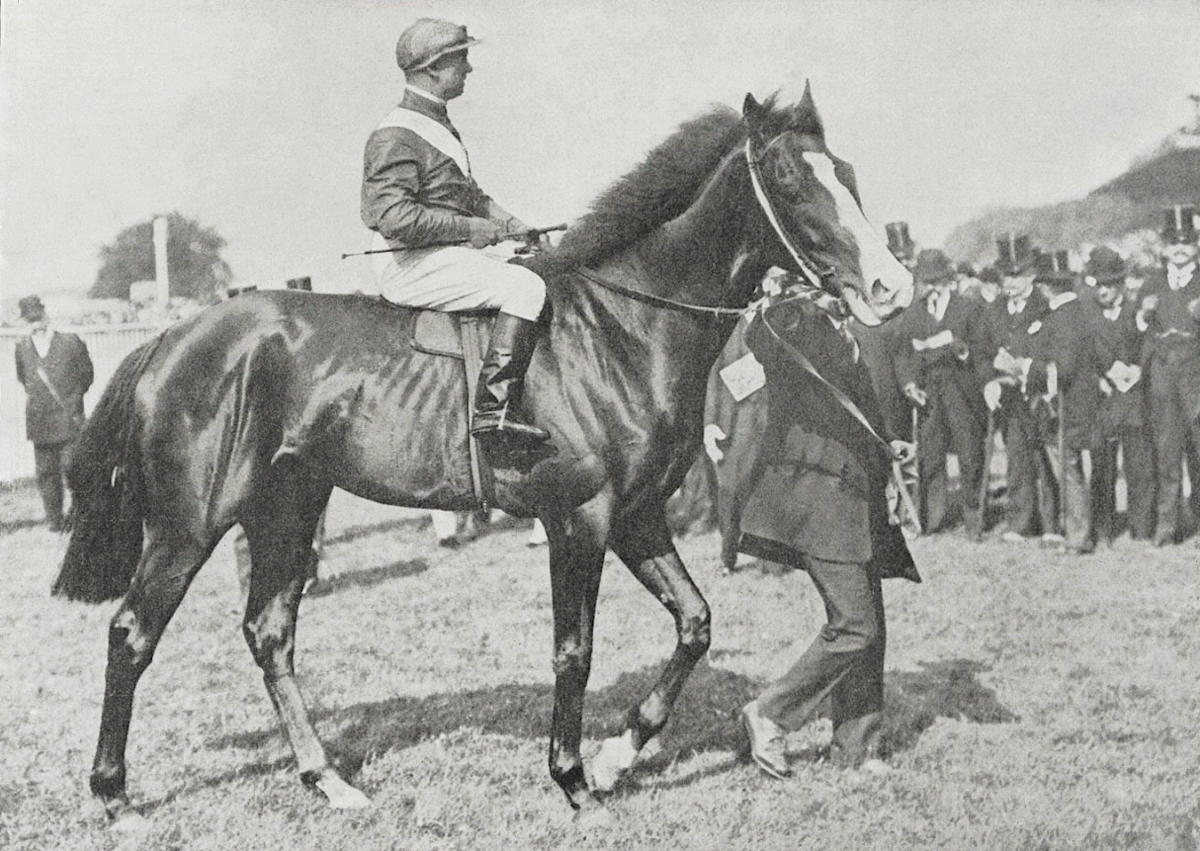
Sardanapale's reputation is even more remarkable considering the shoes he had to fill. He belonged to the 1914 classic crop, but to tell the whole story, we need to return to 1912 - a French racing season that certainly saw quality horses, but no true standout. Both "Guineas" winners, Porte Maillot and De Viris, were multiple major winners and undoubtedly horses of very good class, but they never earned any lasting reputation. The Prix du Jockey Club was won by an outsider, Friant, and the Grand Prix de Paris became a sole significant success of Houli.
Moreover, half the reputation of a thoroughbred is shaped by its stud influence - and from this crop, only Porte Maillot produced some stakes horses among her distant descendants. As years went by, all these names quietly slipped into obscurity.
After such an indifferent crop, the colts born in 1910 stormed through the French racetracks like a tornado. The top two-year-olds matured into the best of their generation at three, and their ranks included some truly big names: the French Guineas & Derby winner Dagor, the Grand Prix de Paris & Prix Royal-Oak winner Bruleur, the Grand Critérium winner and frequent "second-best" Ecouen, and the Prix du Conseil Municipal winner Nimbus II, who was one of seven (!) horses battling for the 1913 Epsom Derby. These four colts alone won no fewer than 20 elite French races; Blarney would add the Prix de la Forêt, while Fidelio, Amadou and Isard II contributed another 22 smaller victories or the top three finishes in major races.
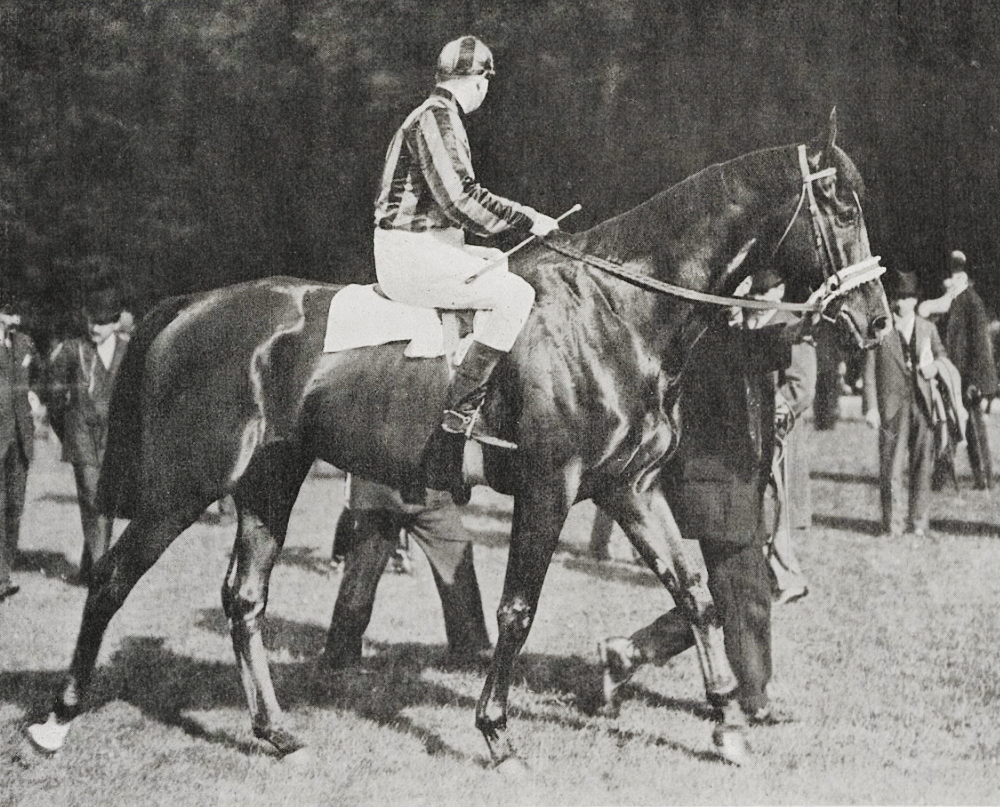
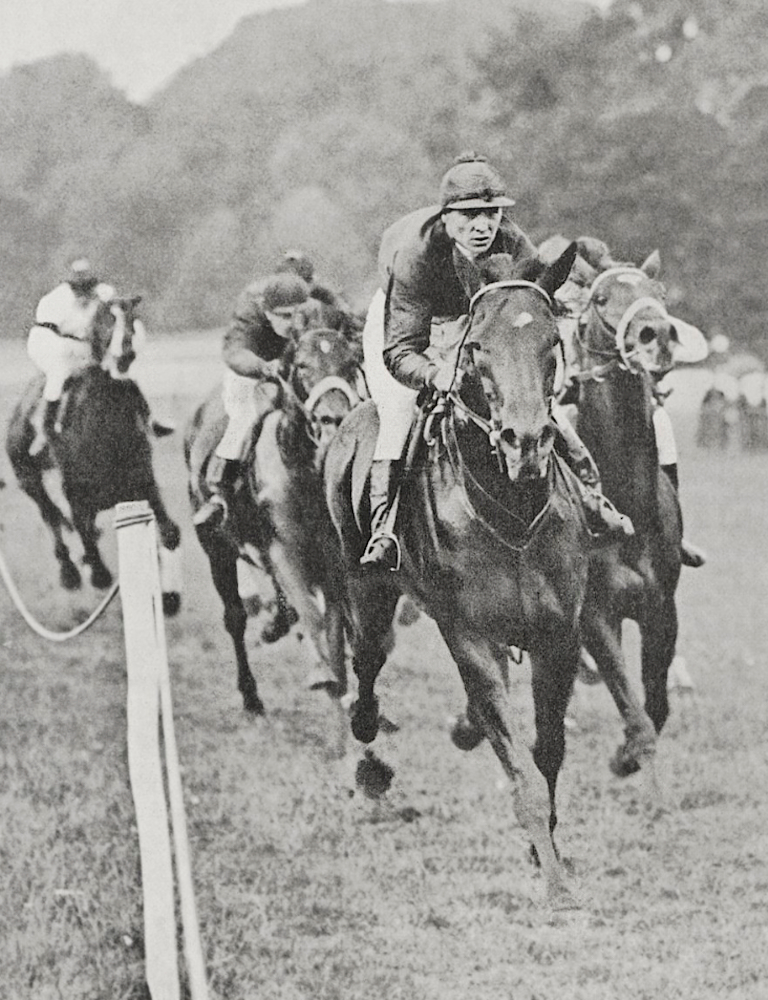
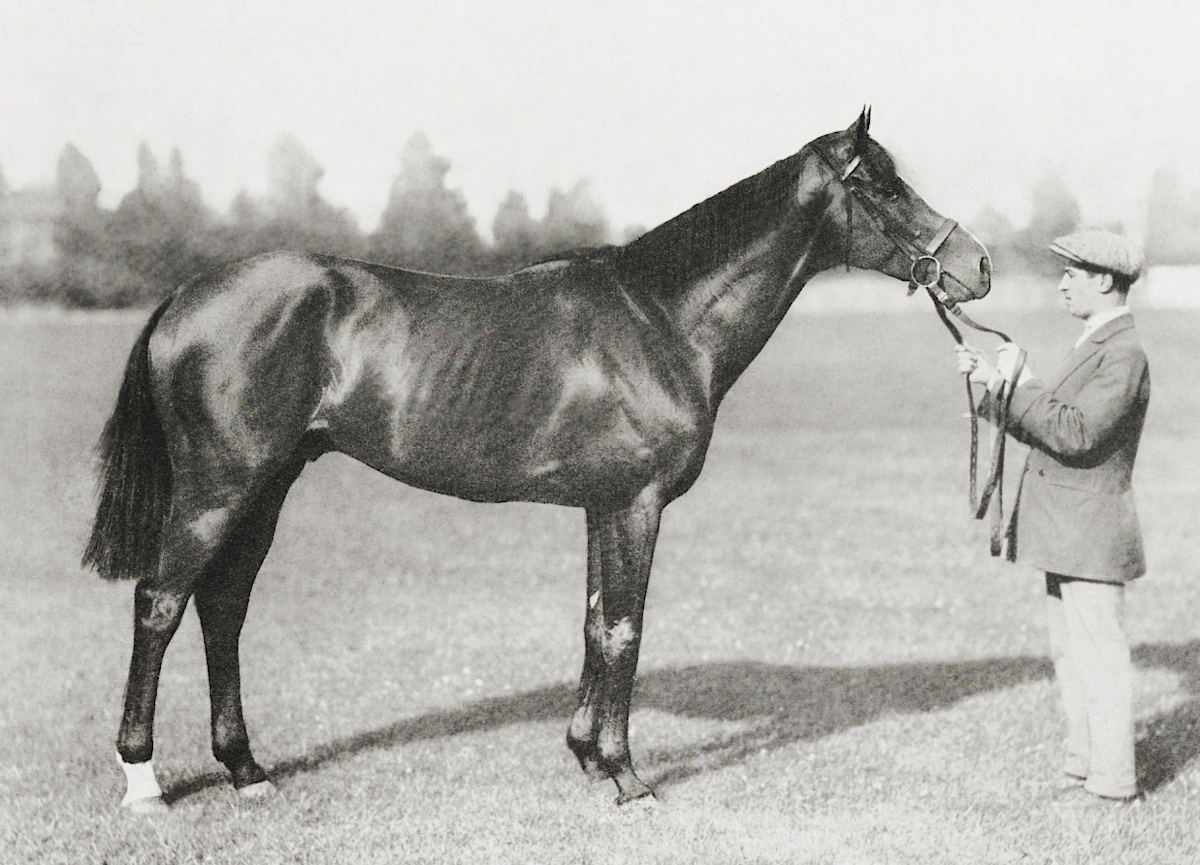
It was a glorious generation of colts, lighting up major French races over the course of three seasons. Their class stood out even more in contrast with the preceding weaker crop - but at the same time, their brilliance set a high bar for their successors. When the French two-year-olds of 1913 arrived, they faced a tough challenge to prove themselves worthy of similar reputation.
The two-year-old season
Sardanapale made his racing debut at Deauville on 8 August 1913, and demolished the field of Prix Yacowlef by four and a half lengths. A victory over unknown rivals brought him little attention, but his next start, Prix Morny, certainly did. Sardanapale was expected to face early-season winners like La Farina and Dagor's full sister Roselys, but the race turned out to be no serious contest. Sardanapale won by more than a length while still held by his jockey; Listman finished a half-length back in third, with La Farina close behind in fourth.
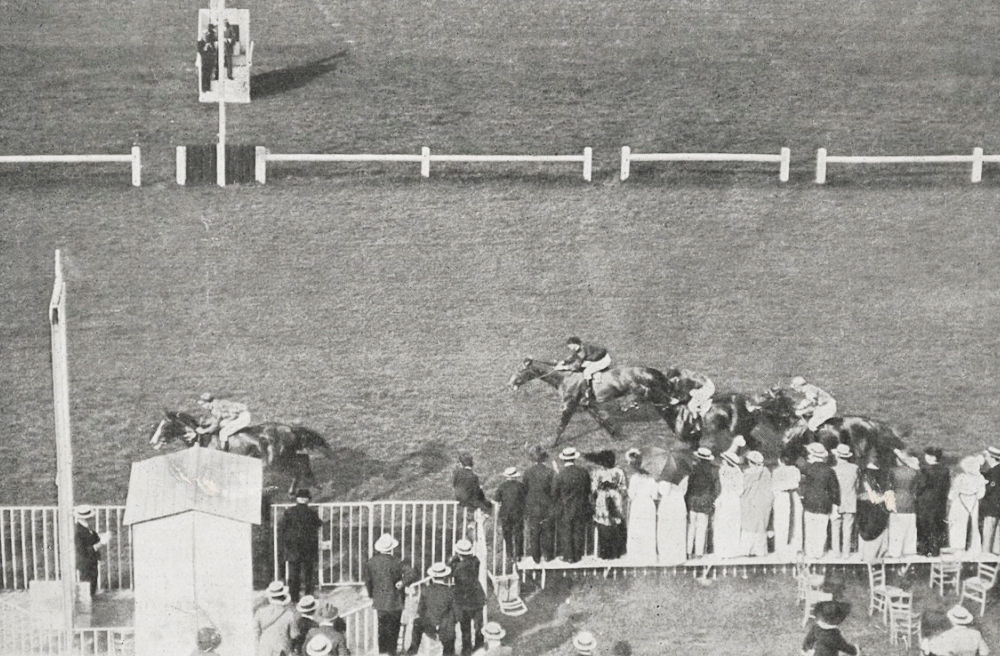
Listman was the surprise of the race, but only a month later, he was the Critérium de Maisons-Laffitte winner over both Roselys and Durbar. La Farina won prestigious Prix la Rochette in a convincing fashion, and the runner-up to him, Sloughi, went on to finish a strong third in the Prix de la Salamandre, well ahead of Durbar. All these results confirmed that Prix Morny was a contest of genuine merit, and positioned Sardanapale as one of the promising juveniles of the season.
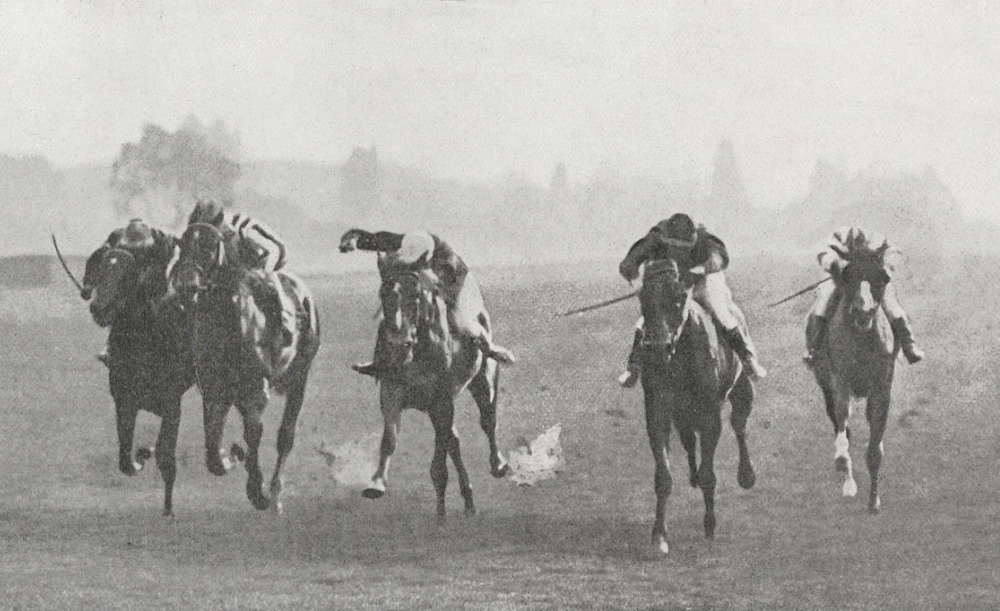
However, for reasons unknown, Sardanapale didn't take part in the usual juvenile action. He returned in early October for the Prix de Seine-et-Oise, where he easily defeated Guerroyante and Jarnac. The former filly had beaten Orelio - one of the top German horses - in the Zukunfts-Rennen; the latter, a four-year-old, was a proven stakes sprinter who had finished second in that season's King's Stand Stakes in England. Sardanapale certainly deserved credit for that victory, but such a three-race winning streak wasn't quite enough to establish him as the superior two-year-old. Especially as a newcomer had entered the scene: Le Grand Pressigny, the chestnut colt who had defeated both Sloughi and Durbar in the Prix de la Salamandre.
Both colts met in the Grand Critérium on 12 October, and the race turned out to be an unlucky one for Sardanapale. He found himself eighth in the final turn and boxed in along the rail, with several lengths to make up in the stretch. Beautifully striding Le Grand Pressigny had no such troubles and easily swept past Frileux, who held on gamely for second. Sardanapale's determined late surge carried him into third, just 2 1/2 lengths behind the winner - but Le Grand Pressigny had impressed so much that nobody even thougt to offer excuses.
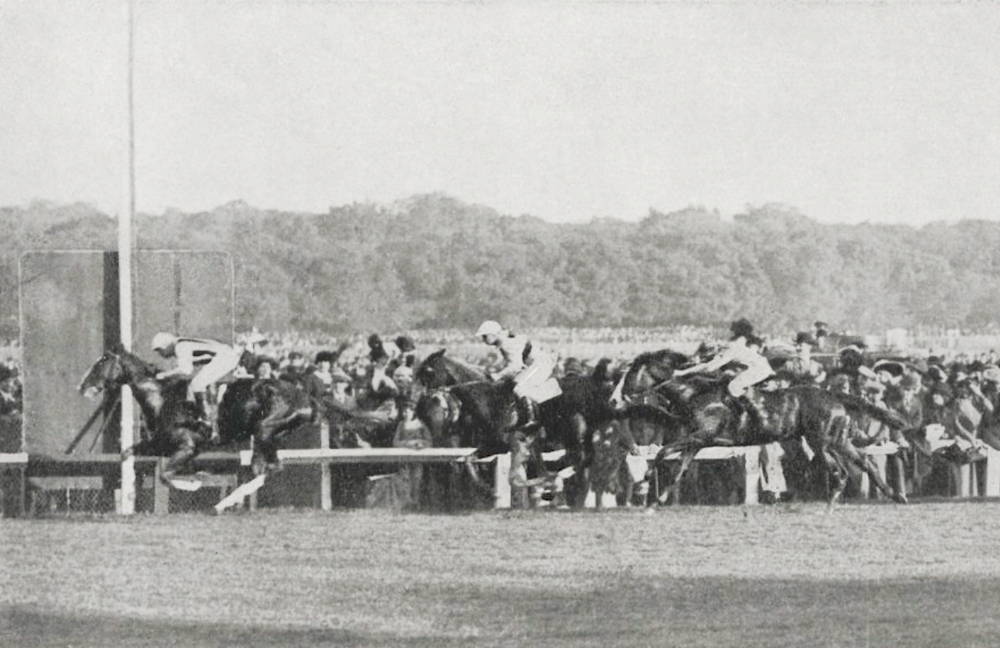
A week later, the two colts clashed again, turning the Prix de la Forêt into a fair rematch. They were joined by the Prix Biennal winner Guerroyante, the Salamandre runner-up Maitre et Segneur, and by Roselys - but none of them stood a chance. Le Grand Pressigny and Sardanapale entered the stretch clear of their rivals, head to head, and in an honest battle, Le Grand Pressigny prevailed by nearly the same 2 1/2 lengths.
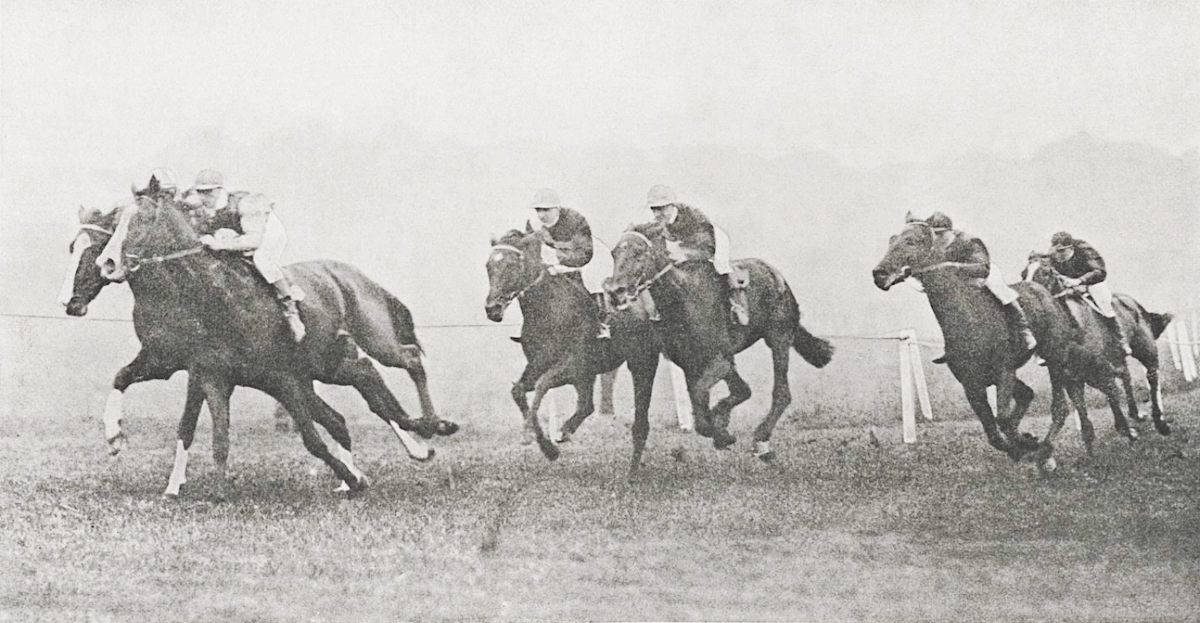
With three major victories and little room for doubt within the season's results, Le Grand Pressigny was unanimously accepted as the best two-year-old in the country. Racing commentators noted that, as he dominated the final weeks of the season, he already "looked like a three-year-old" - a big, long-striding, and highly imposing colt. These were qualities that Sardanapale somewhat lacked, and there's no doubt it added to the general sentiment that the best one, indeed, had become the champion.
The best horse in the world
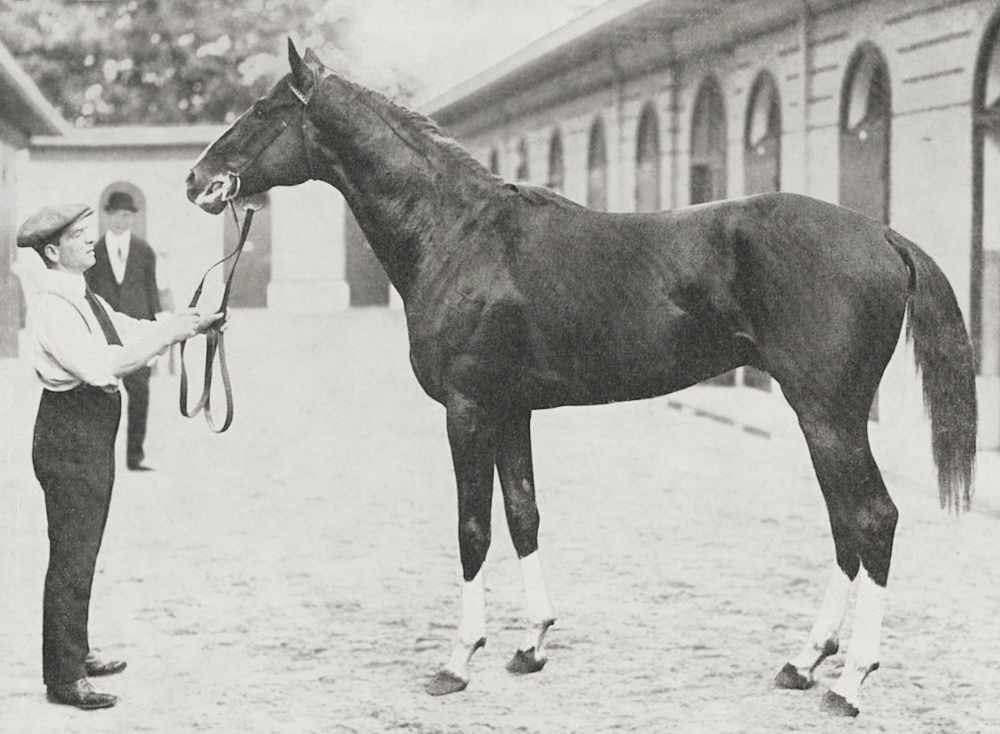
A very good two-year-old season was merely the beginning of Sardanapale's story. With his dam's pedigree rich in British stayers and strong performances at two, he was naturally regarded as the leading classic contender. But beyond hopes and excitement, his three-year-old campaign had yet another layer: a very tight schedule.
At the beginning of the 20th century, racing officials weren't shy about proposing true tests of endurance - and connections would not only accept the challenge, some planned for it. Alongside racing class, physical toughness used to be a criterion that clearly separated exceptional horses from the good ones: many can win a top race - but only an outstanding horse can do it every few days.
3 April
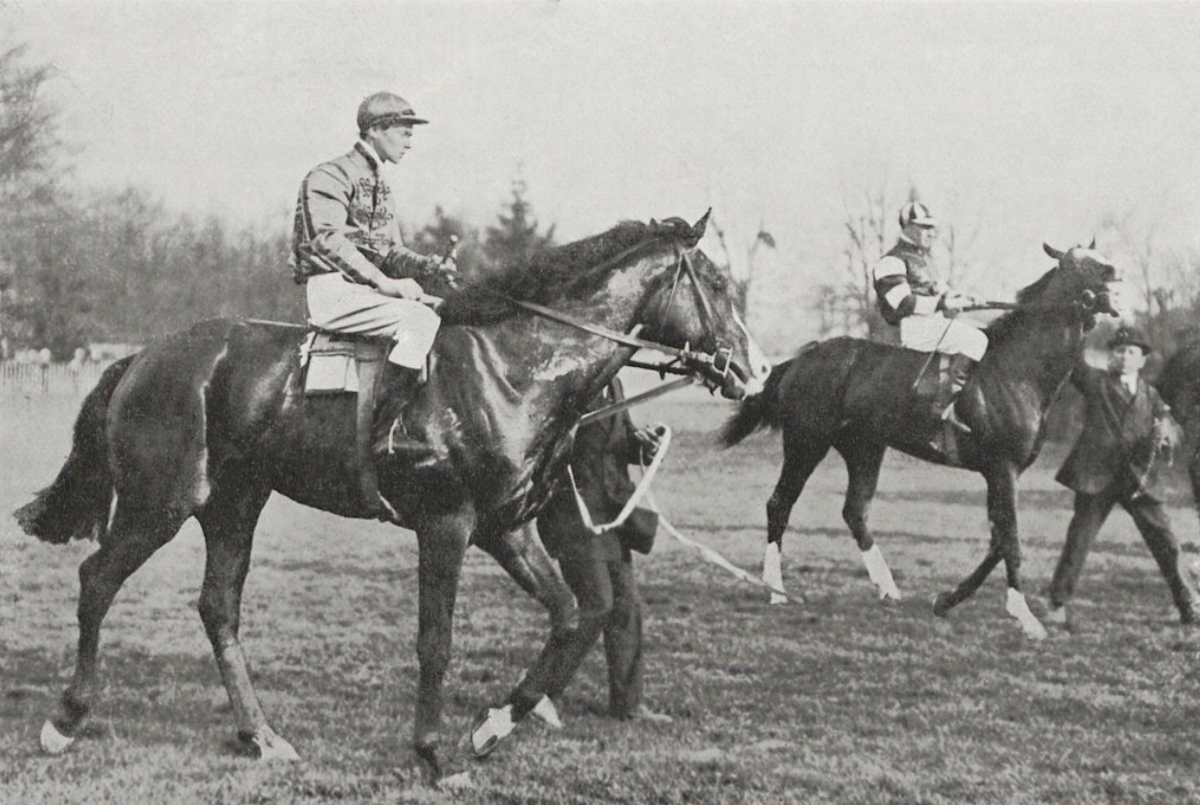
Both Sardanapale and Le Grand Pressigny began their three-year-old campaigns in ten-furlong Prix Lagrange. Discontinued in the 1970s and largely forgotten by racing fans, the race was once conisdered as prestigious as the Grand Critérium or other classic trials. In fact, its purse exceeded that of both French Guineas at the time. The reigning juvenile champion didn't seem comfortable during the race, and while his stamina was not a concern, the small Enghien hippodrome didn't appear to suit such a large-framed horse. Sardanapale won comfortably by two lengths over Durbar, with Le Grand Pressigny right behind in third.
15 April
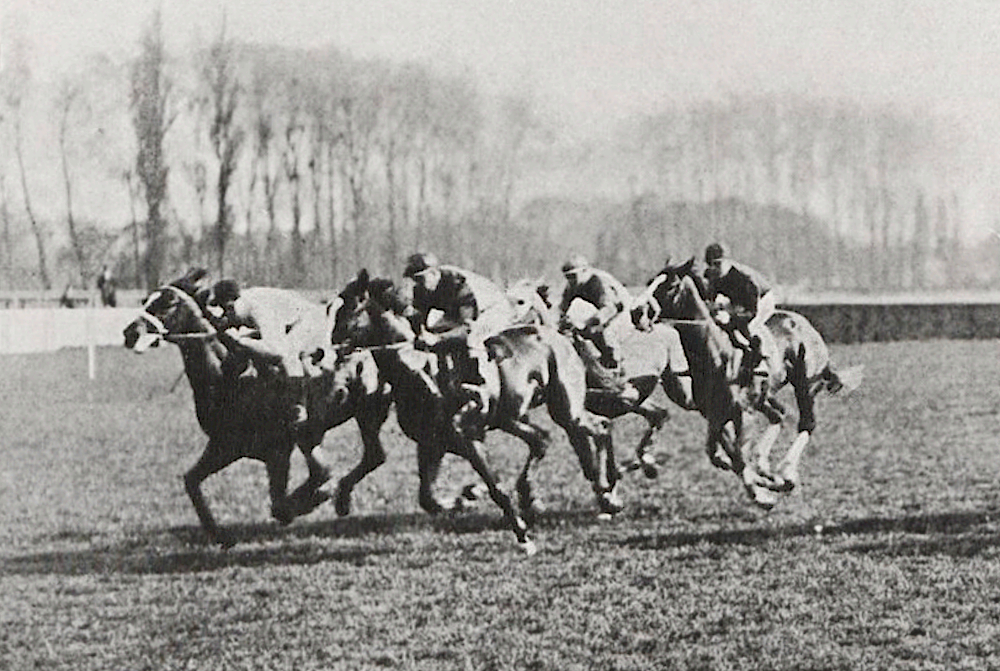
Despite a strong start to the season, Sardanapale recorded the only unplaced finish of his career in his next outing. He was sent to Maisons-Laffitte for a clash with older horses in Prix Boiard - a rich race worth 50,000 francs, although traditionally dominated by the more mature runners. And Sardanapale was about to face the best of them: Nimbus, Isard II, and Fidelio. Nimbus was considered a horse of exceptional ability at the time - not only for his creditable Epsom adventure but also for what followed. After returning to France, he had finished a close fifth to Bruleur in the stellar edition of the Prix Royal-Oak, but then swiftly turned tables by brutally demolishing Bruleur in the Prix du Conseil Municipal, still only hinting at his true potential.
The spring of 1914 would turn into a triumphant one for Nimbus. Prix Boiard became his second trophy before claiming both the Prix du Cadran and the 56th Prix Biennal; he won the race decisively, defeating his fellow four-year-olds by two legths. Sardanapale still delivered a courageous performance, keeping pace with the older horses and even leading in the stretch, only to weaken in the final furlong.
19 April
Only four days later, Sardanapale returned to battle colts of his own age in Prix Hocquart, one of the valuable classic trials. Despite the large field, no major rival turned up, and the biggest threat, Oreste II, fell at the final turn. Sardanapale was given a comfortable 2 1/2-length victory, but both Dorrit and Hickory, who were well beaten, would go on to earn respectable stakes results.
By this point, the three-year-old campaigns of Sardanapale and his rivals had begun to diverge, only to intersect again at key moments later in the season. Naturally, their performances continued to shape how Sardanapale's own were judged and received - and for that reason, we need to follow their paths as well, if only briefly.
On 26 April, La Farina and Durbar lined up in the 57th Prix Biennal. The event originally consisted of two legs - one for three-year-olds and one for older horses, with the latter regarded as a major event of the spring calendar. The three-year-old edition could serve well as a classic prep race over 10 furlongs, and after a gutsy performance, Durbar prevailed by a head over Kummel. La Farina was returning from a lengthy layoff, after a fetlock injury had sidelined him late in 1913; he failed to meet high expectations but still finished a respectable third.
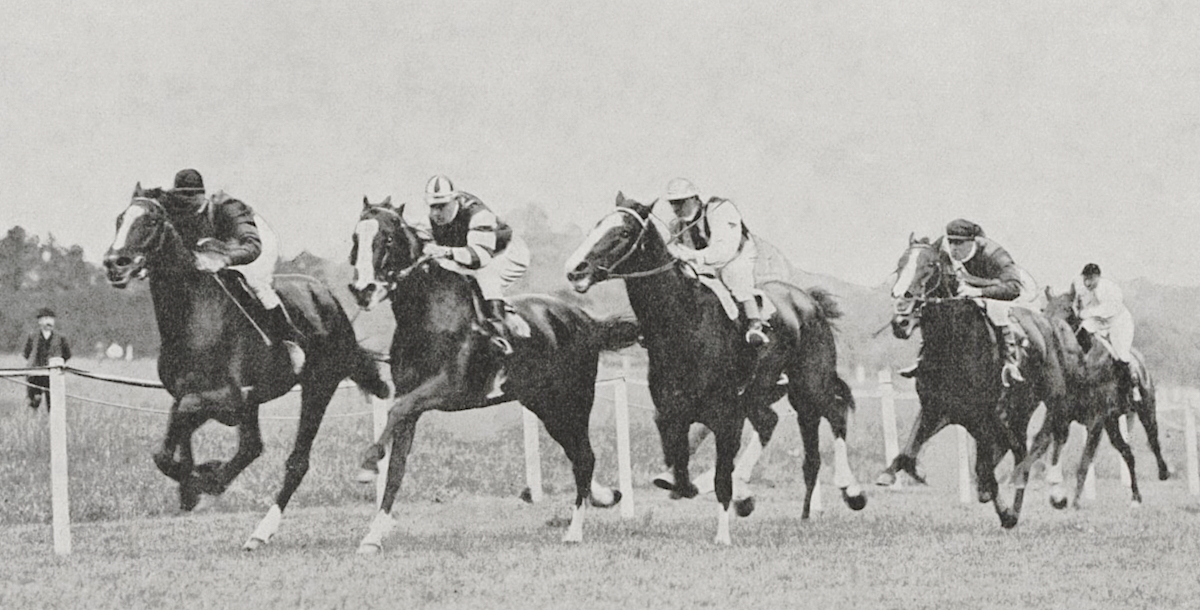
Just a week later, on 3 May, Durbar was back in action - alongside Le Grand Pressigny in Prix Noailles, and they easily turned the 1 1/2-mile race into a two-horse show.
3 May
With the one-mile Guineas still to come, Durbar's preparation may have seemed a bit peculiar. But Sardanapale himself took a rather unusual path toward the classics, contesting Prix Miss Gladiator. Subtitled "Poule de Produits," the race had complex entry conditions: horses had to be nominated a year before their birth, with additional stipulations regarding their siblings. Still, for a minor race, the purse made it a worthwile outing once a horse became eligible, and Sardanapale got a well-paid workout, winning by two lengths over Ambre II.
Sardanapale did not contest the Poule d'Essai des Poulains on 17 May, and the first classic race for colts was won by a good old Listman, by a length over La Farina and another proven stakes horse, Golden Sirup. Both Durbar (fifth) and Le Grand Pressigny (eighth) were soundly beaten, though neither of them finished far behind the winner. One still has to wonder what toll Prix Noailles may have taken on them.
21 May
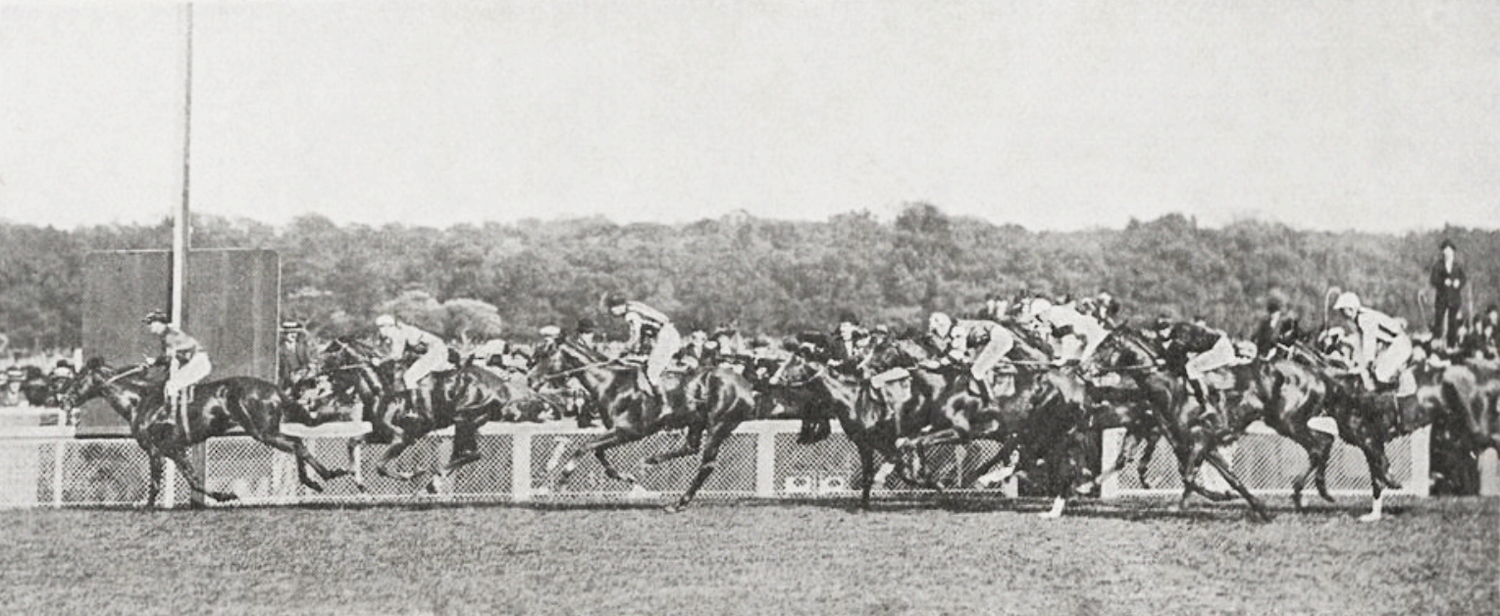
Sardanapale, already a winner of ten- and twelve-furlong races earlier in the season, was instead entered into Prix Daru (10.5f) - and met the very same La Farina, who placed in the Guineas four days earlier. The athletic chestnut was in a terrific form and defeated Sardanapale by almost four lengths, stopping the clock at 2:15 1/5 - the fastest time recorded for the race in decades. The race was arguably the worst defeat of Sardanapale's career, which is a rather ironic distinction for a runner-up finish.
Before La Farina and Sardanapale could meet again, the unthinkable happened: Durbar won the Epsom Derby! The French colt took the lead halfway through the race and won with surprising ease, finishing about 2 1/2 lengths clear of Hapsburg and Peter the Hermit.
The race didn’t spark much excitement among British observers - Durbar was not considered the best of his generation, and Hapsburg, a 33/1 outsider, didn't add much glamour to the result either. But French turfmen also received the news with mixed emotions, only for different reasons:
The French had been waiting for an Epsom Derby win since 1865, and many great horses failed in the attempt - Insulaire, Gouverneur, or Jardy, each of whom would have been a proud addition to the winners' list. Durbar finally brought the trophy home, and people were proud of the French victory - only Durbar wasn't the hero everyone wanted.
From a modern perspective, Durbar is often regarded an "inferior" or "weak" Derby winner. But even a brief dive into the racing form casts doubt on the origin of this assessment - could it stem from the immediate "outsiders vied for the Epsom Derby" sentiment? It was valid in May 1914 but disproven well before the season was over: Hapsburg strongly upheld the Derby form by defeating Kennymore and Black Jester, the Guineas & St. Leger winners of 1914 - and brilliant careers of these best British three-year-olds of 1914 are really worth exploring beyond the scope of this article.
The form of their French counterparts is told in this story, and most of it is still yet to come - but we will be talking record-setting performances, punishing schedules, and four-year-olds brought to their knees. What more could we have asked of three-year-olds? No one claims that Durbar was an exceptional racehorse - but there's no argument against his class in the 1914 races, as long as we're willing to look.
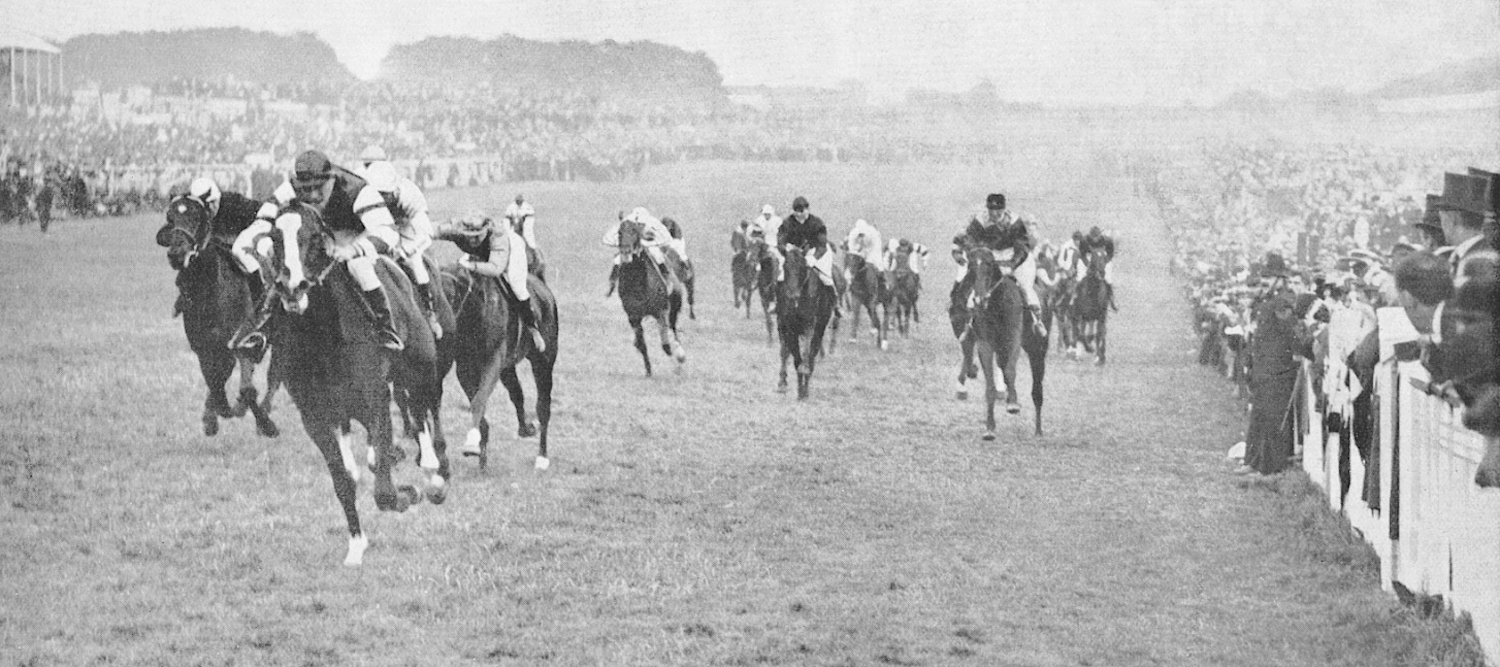
Whatever racegoers thought of Durbar at the time, he naturally emerged as one of the leading French Derby contenders. But one more major trial was still scheduled, and it would attract both of his great rivals, La Farina and Sardanapale.
31 May
10.5-furlong Prix Lupin took place just four days after Durbar's Epsom triumph and only ten days after Sardanapale and La Farina had met in Prix Daru. And they didn't face any ordinary rivals: Mousse de Mer had won Prix Robert Papin as a two-year-old and would soon finish a close second in Prix de Diane. Le Corsaire, third in Prix Greffulhe, would emulate that placing in the French Derby, and Oreste II, who had fallen in Prix Hocquart, had won multiple minor stakes and clearly defeated Durbar's Biennal rival Kummel.
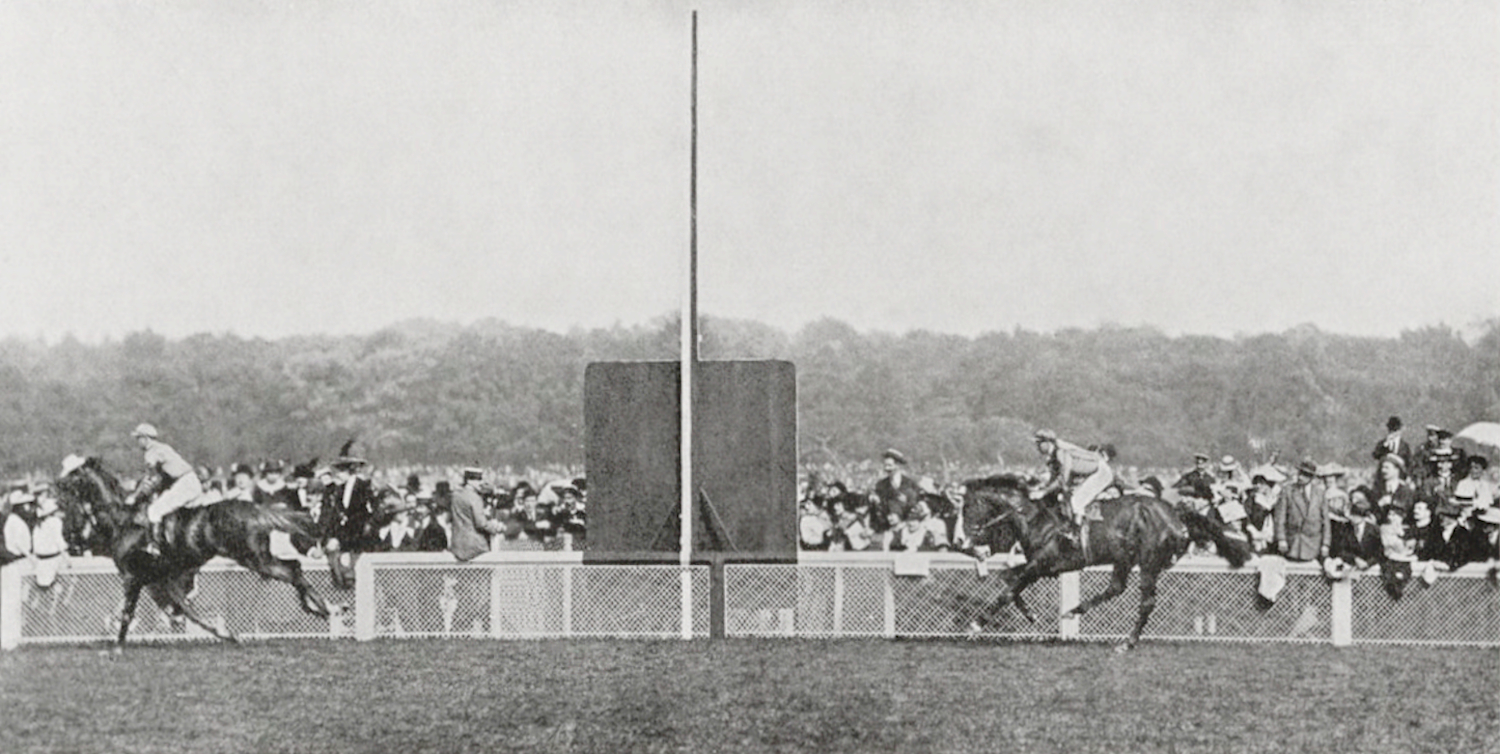
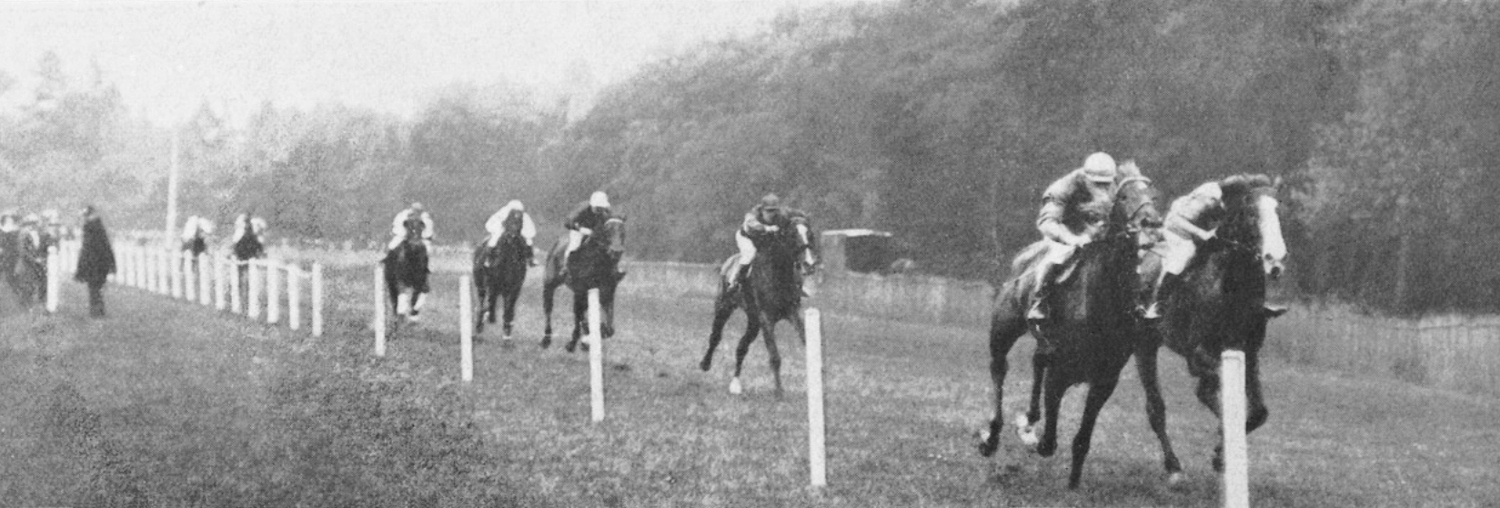
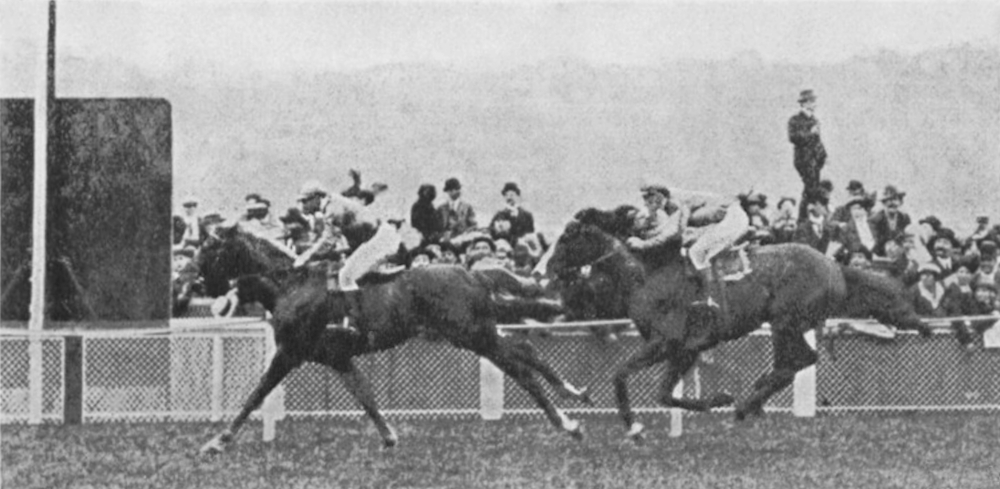
None of it, however, seemed to matter. La Farina and Sardanapale delivered a duel to remember, a race described as "one of the most beautiful in a long time." The two colts quickly separated themselves from the field and fought side by side all the way to the line. And after two kilometers, all the difference between them was - one length.
7 June
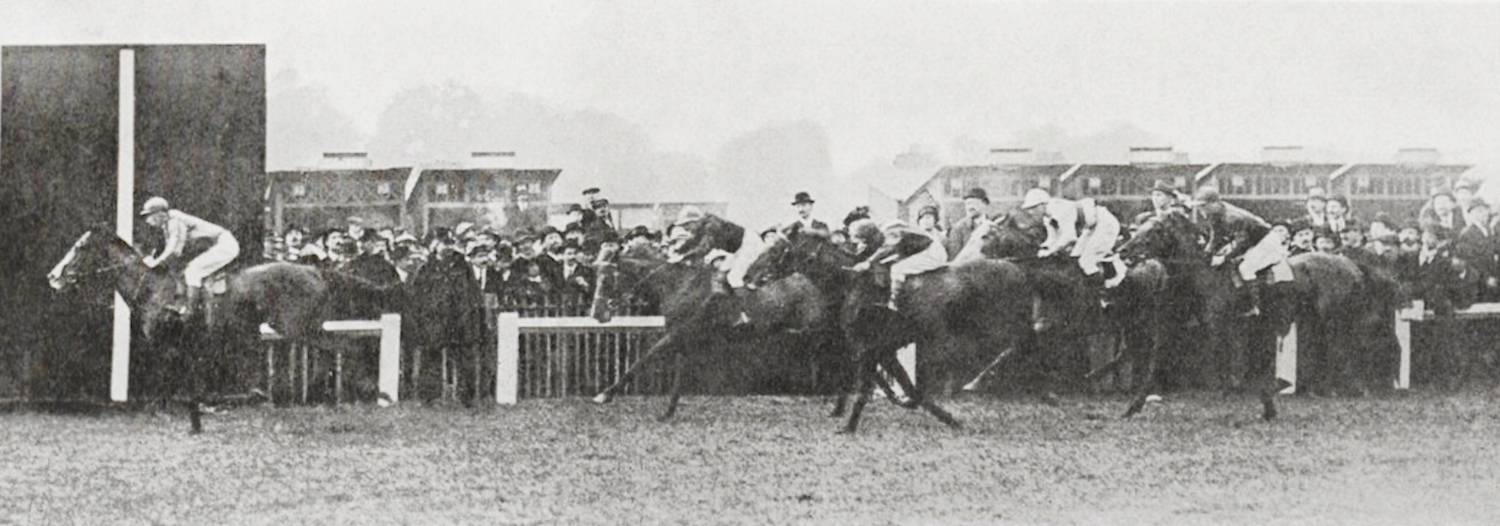
No rest was scheduled for Sardanapale before the French Derby, as he had been entered in Prix d'Hédouville on the French Oaks undercard - a 10-furlong test that attracted both Dagor and Ecouen. There was no early rush without a speedster like La Farina, and all three favorites were allowed to relax, sitting nicely about three lengths off the lead. Sardanapale was known for his explosive turn of foot and had no trouble winning from such position, defeating the previous French Derby winner by 2 1/2 lengths.
14 June: The Prix du Jockey Club
You've likely noticed: Sardanapale was sent into the French Derby just seven days after defeating the country's top older horses. More remarkably, he was lining up against Durbar, the reigning Epsom Derby champion and, by most accounts, the best three-year-old on the other side of the Channel. As rushed as such a schedule might seem today, Sardanapale took the test - and came out a winner.
Durbar's stablemate Frizzle set the pace, with both major contenders tracking closely from third and fourth. Durbar made the first move at the final turn and kept up the pressure, but as noted before, few horses could match Sardanapale's acceleration. He surged past his rivals to win by 2 1/2 lengths.
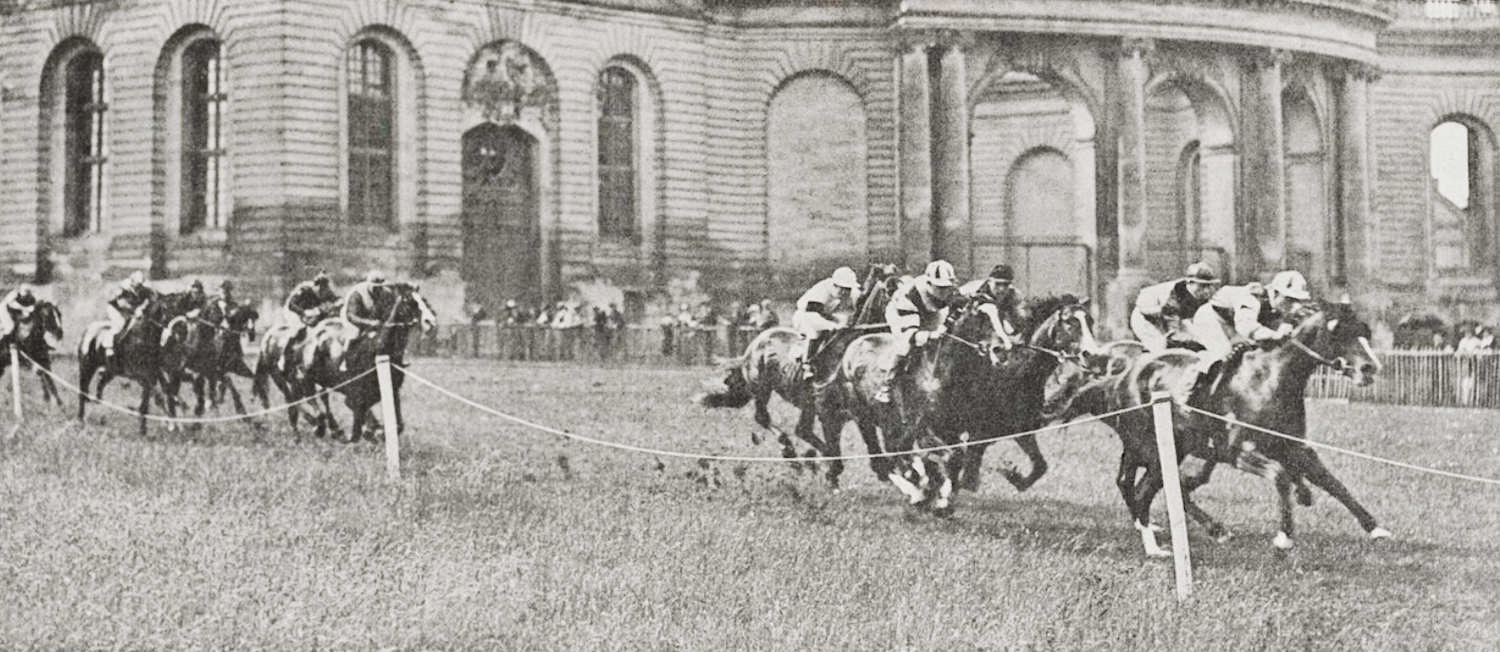
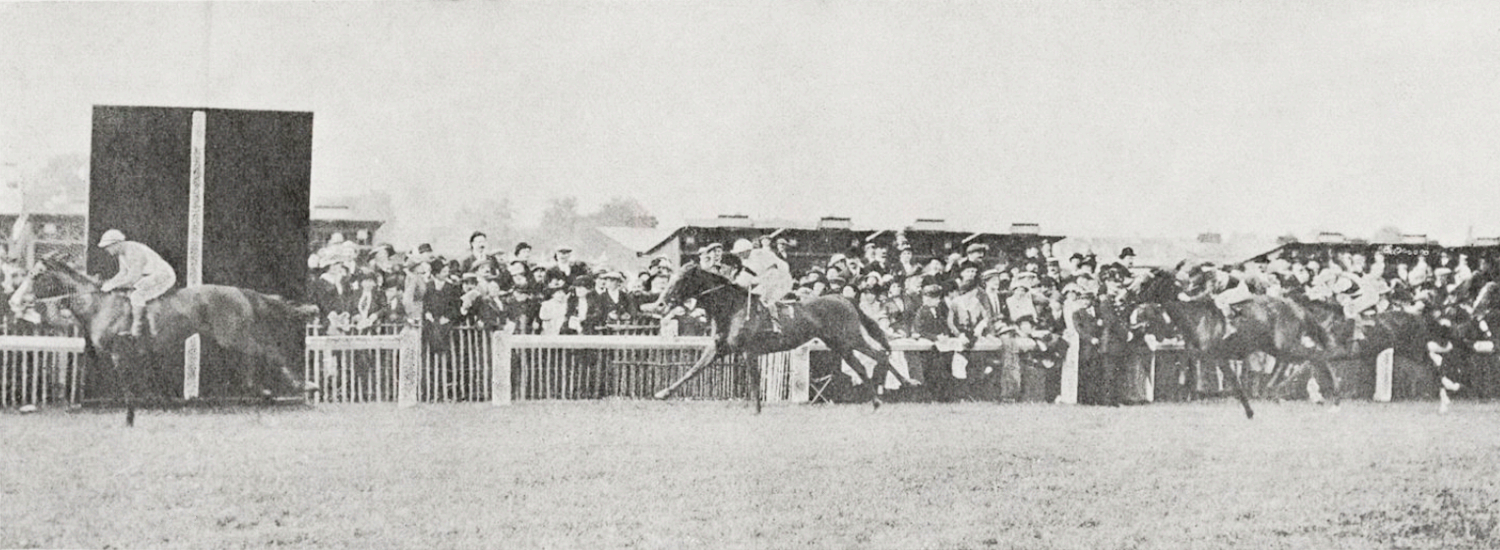
Diderot and Le Corsaire, who surprisingly finished second and third, brought 10 May Prix Greffulhe form into the Derby. Durbar, most likely, did the same: he may have appeared well beaten at the line, but a margin of six lengths generally translates to roughly one second. And finishing a second behind Sardanapale in a 1 1/2-mile race was no disgrace, even for the Epsom Derby winner.
Sardanapale's final time - 2:37 1/5 over 1 1/2 miles - was on the slow side, but the cautious early pace made sense, given the presence of a dangerous rival like Durbar. The race was clearly played to suit Sardanapale’s strengths, and the strategy paid off with the only thing that matters after the Derby: victory.
25 June: The Grand Prix de Paris
With the French Derby still run over its original 1 1/2 miles, the Grand Prix de Paris stretched even farther, to 1 7/8 miles - and came just eleven days later. For three-year-olds, it was a stern test of class and endurance. At least on this occasion, only a short break wasn't a disadvantage for Sardanapale - Le Corsaire, Durbar, and Listman had also come straight from the Derby. A fresh La Farina, however, promised a very different kind of race; Le Grand Pressigny returned to top company, and the field also welcomed Alerte VI, the recent Prix de Diane victress and nemesis of the Guineas winner Diavolezza.
La Farina lived up to his reputation and shot to the lead. But this time, Georges Stern did not send Sardanapale in hot pursuit - instead, he settled the bay colt patiently in third, with Durbar breathing at his back. Alerte VI and Le Grand Pressigny led the rest of the field, but under La Farina's strong pace, the race began to resemble a single-file procession as the furlongs ticked by. Sardanapale entered the stretch third and still several lengths behind - and even with his magnificent speed, he caught La Farina with less than a furlong to go.
We know from a rare report that La Farina was ridden by Frank O'Neill - and the finish of the Grand Prix de Paris turned into a breathtaking battle of two great jockeys on two great horses. At the end, Georges Stern edged out a victory - by a short neck at best.
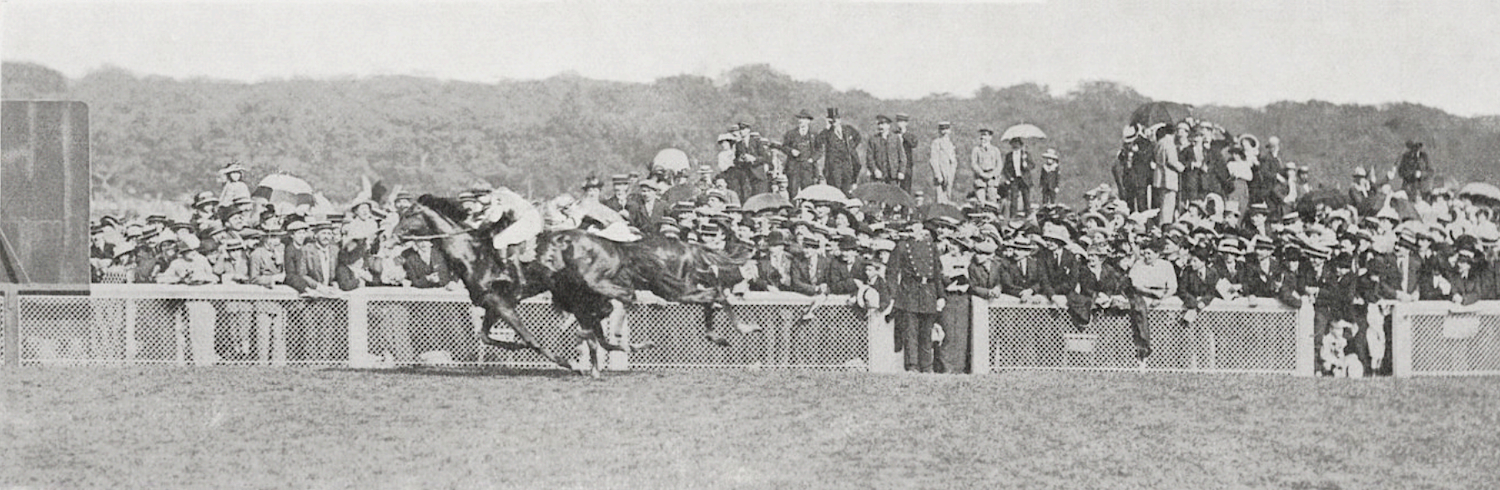
Gutsy performance aside, Sardanapale silenced any lingering doubts about his class: pushed to the limit, he set a new race record - 3:11 1/5 for 3,000 meters, with the previous mark of 3:13 2/5 held by Bruleur. He also finally established himself as the leader of his crop - although his position was still tenuous, resting more on the weight of the Jockey Club - Grand Prix double than his dominance on the track.
Even with his indisputable contribution to the race's record time, it's still worth underlining just how much credit La Farina deserved for his performance. Stretching out to nearly two miles, an excruciating distance for such a naturally speedy horse, and still falling only to likely the best three-year-old in Europe - that was nothing short of heroic. The racing history remembers La Farina as the winner of classic trials who "only" placed in major events - but at his best, he was every bit Sardanapale's equal. He deserves to be remembered as such.
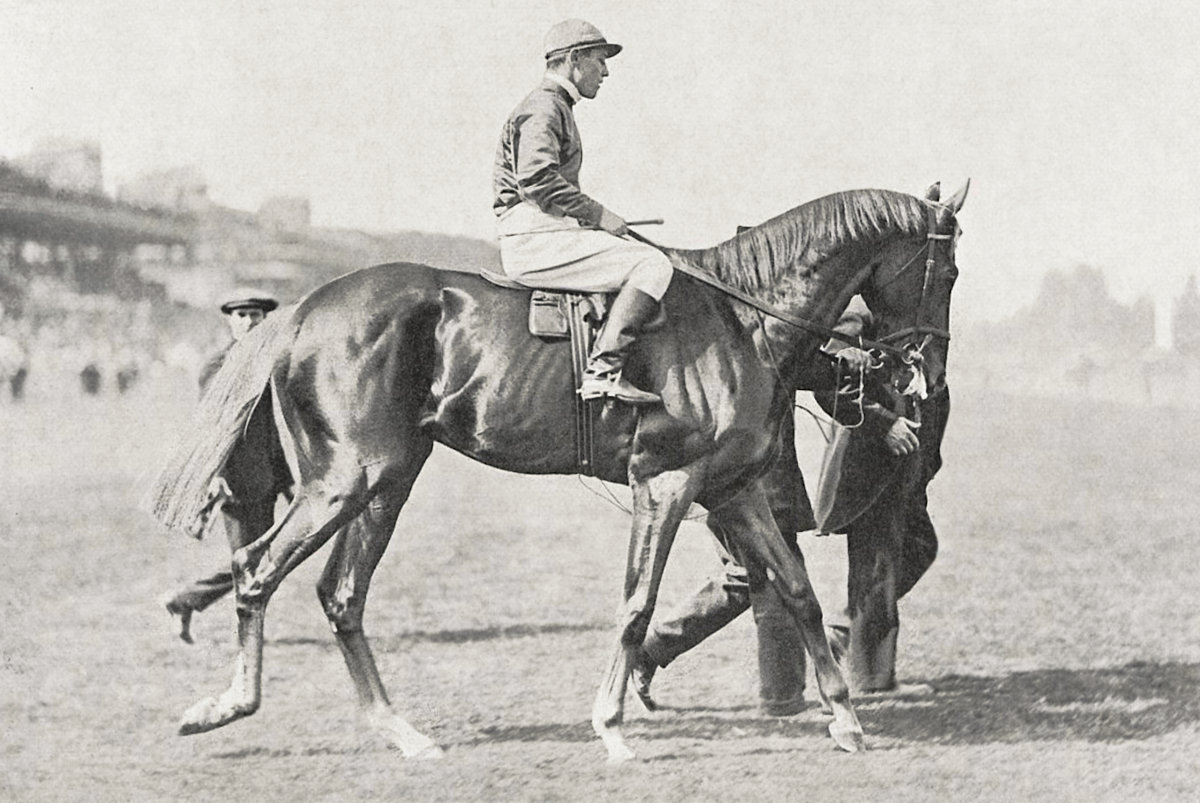
And as for the third hero, Durbar - he was no match for the leading pair in the race but still finished a clear third, ahead of an outstanding field. With such a thrilling finish, it's understandable that no one paid attention to the margin between La Farina and Durbar, nor is there any photo documenting it. All we know is that in the mid-stretch, Durbar was losing only about four lengths - and unless he completely faded, he likely improved on the previous stakes record time himself.
Given that Sardanapale lowered the mark by two seconds, Durbar had ample room to trim off at least several fifths - and of course, a record time (or a near-record) over 3,000 meters would only strengthen the case against his once-dismissive label as "inferior."
Two days before the Grand Prix, a colt named Djamy won 15-furlong Prix Berteux. He had previously defeated pacesetting Le Grand Pressigny on Prix Lupin day, and this time outclassed both Frileux, the former runner-up from the Grand Critérium, and Mon Petiot, who had placed behind Ecouen in Prix la Force. The form looked strong, but Djamy stood out so clearly that racing commentators immediately lamented his absence from the Grand Prix.
5 July: The Prix du Président de la République
The turn of the 20th century saw a rapid development of France's most prestigious races. In 1893, Longchamp inaugurated the Prix du Conseil Municipal, an autumn 1 1/2-mile event open to three-year-olds and older horses. Maisons-Laffitte followed in 1904 with its summer counterpart, the Prix du Président de la République, slightly longer by a sixteenth of a mile. And only 16 years later, the Prix de l'Arc de Triomphe would emerge - to eventually eclipse both.
In 1914, the two existing races offered identical purses and served well as natural seasonal targets. There was one distinction, though: while the Prix du Conseil Municipal was widely respected, the Prix du Président de la République, aided by frequent visits from members of royal families, immediately became the most prestigious race, with a history rich in some of the sport's greatest names.
Also Sardanapale was asked to deliver his best in the race. He faced all the top four-year-olds - Nimbus, Dagor, and Ecouen. There was even a visitor from England - Florist, a colt who had beaten the formidable Son-In-Law and placed third behind him in the Goodwood Cup. La Farina was now deemed ready to tackle both the older horses and Sardanapale once again, and so were the rising contenders, Djamy and Mon Petiot.
While it may not have been the strongest possible squad of three-year-olds, one serious disadvantage stood out for Sardanapale: of all his mates, his season had been by far the most demanding. He had made nine starts already, and now, just ten days after the grueling effort over nearly two miles, he was being asked to defeat both his peers and the best older horses in the country. By any measure, it was a brutal test.
It's not unusual for a race to unfold differently than the public expects - but this one left witnesses frozen in disbelief. La Farina took the lead - that much we know from the brief descriptions offered by disappointed commentators. But in sharp contrast to his previous races, he gave way in the final turn and Djamy took over, with Sardanapale cruising on the outside. Those hoping that La Farina would summon his usual spark were horrified to see the great chestnut drop back through the field. Even more surprisingly, the other stars looked equally flat: Ecouen was already under a strong hand ride, and Nimbus was simply done. The emerging three-year-olds ran an honorable race and got the better of Dagor — but six lengths in front, untouched and untested, Sardanapale won in a walkover.
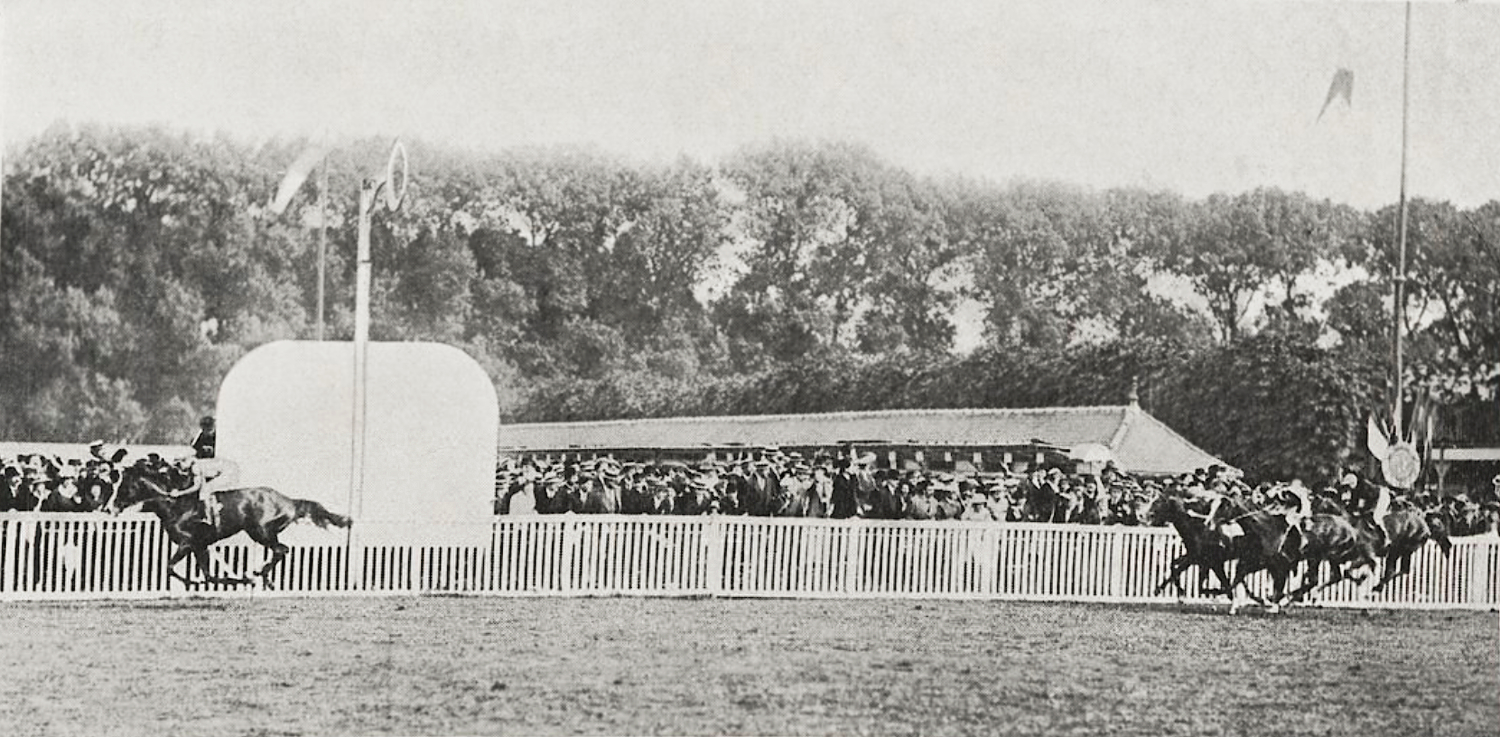
Even after the race, people were not sure what to make of the result - or, more precisely, of the race itself. With all due respect, Djamy and Mon Petiot weren't considered the elite of the crop - but could it really be that all the top horses collapsed the same afternoon, in the same race? Regular racegoers know: this kind of thing simply doesn't happen. La Farina might have been tired but what about four-year-olds, especially Nimbus - the colt who always delivered, and didn't get broken even by a 2 1/2-mile race and three days' rest? The direct witnesses didn't know what happened - and more than a century later, neither do we.
As for the winner - nobody questioned the brilliance of Sardanapale's victory. By this point, he had clearly progressed beyond the promising colt of the spring trials, and matured into a truly magnificent racehorse.
26 July: The closure
After his brilliant treble, Sardanapale made one final public appearance: in Maisons-Laffitte's Prix Eugene Adam. Like many other races mentioned in this article, today's Gr.2 contest had a very different character a century ago. First run in 1893, it was initially a modest handicap based on total earnings - and not particularly appreciated. Despite a structured system of penalties for horses who earned 50, 100, or 200 thousand francs, the pursed remained very low: at only 20,000 francs.
To put it into perspective, most of Sardanapale's races were worth 40,000 francs, and major events like the Prix du Jockey Club offered purses of 100,000. Naturally, few horses earned as much and weren't deemed quality contestants of Prix Eugene Adam - and if they did, their connections were reluctant to enter a race where they'd have to concede as much as 16 pounds to lesser rivals for only a modest prize.
The race gained both purse boost and some prestige in the early 1900s, with celebrated winners like Gouvernant and Maintenon. And by 1911, the prize money had been increased to respectable 40,000 francs. Even so, the handicapping system remained punishing - even a top-class horse like Alcantara II was defeated after giving more than 14 pounds to his opponents.
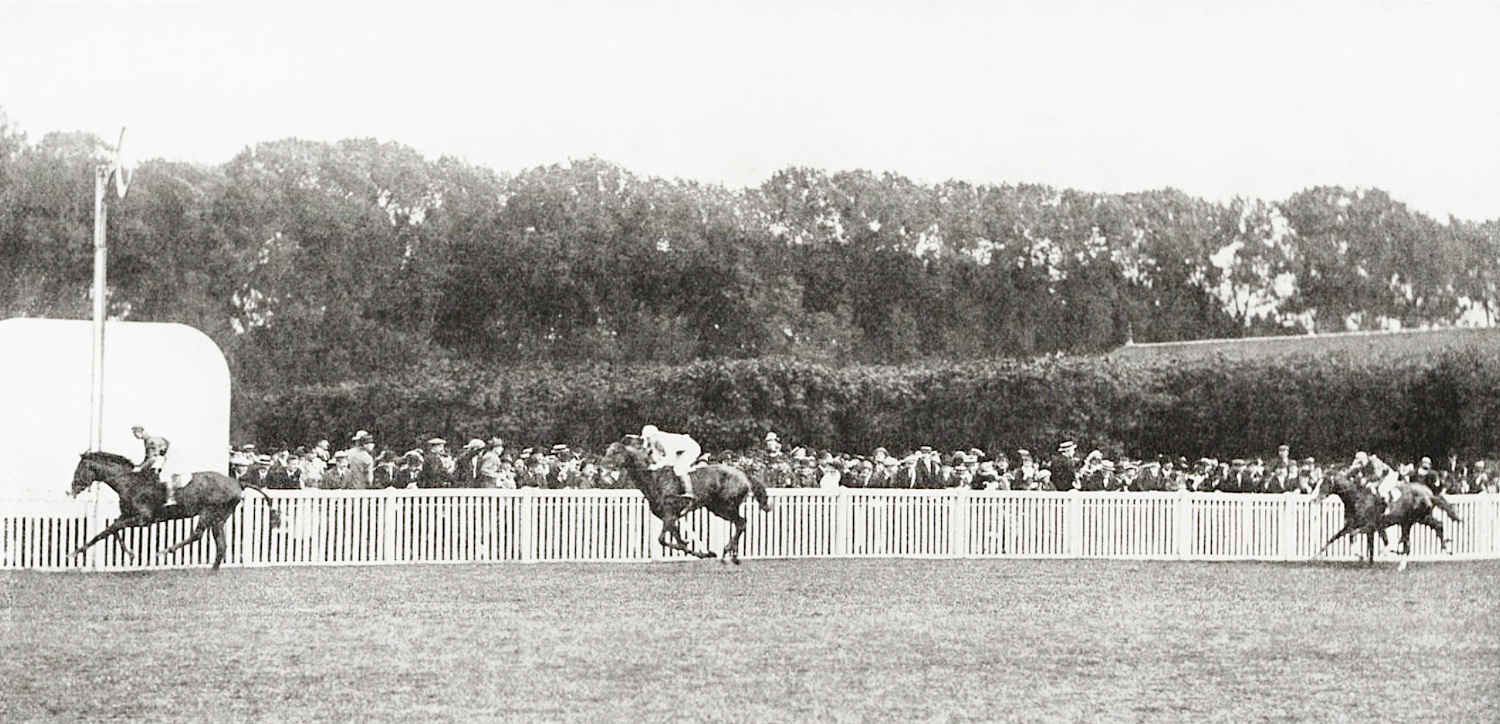
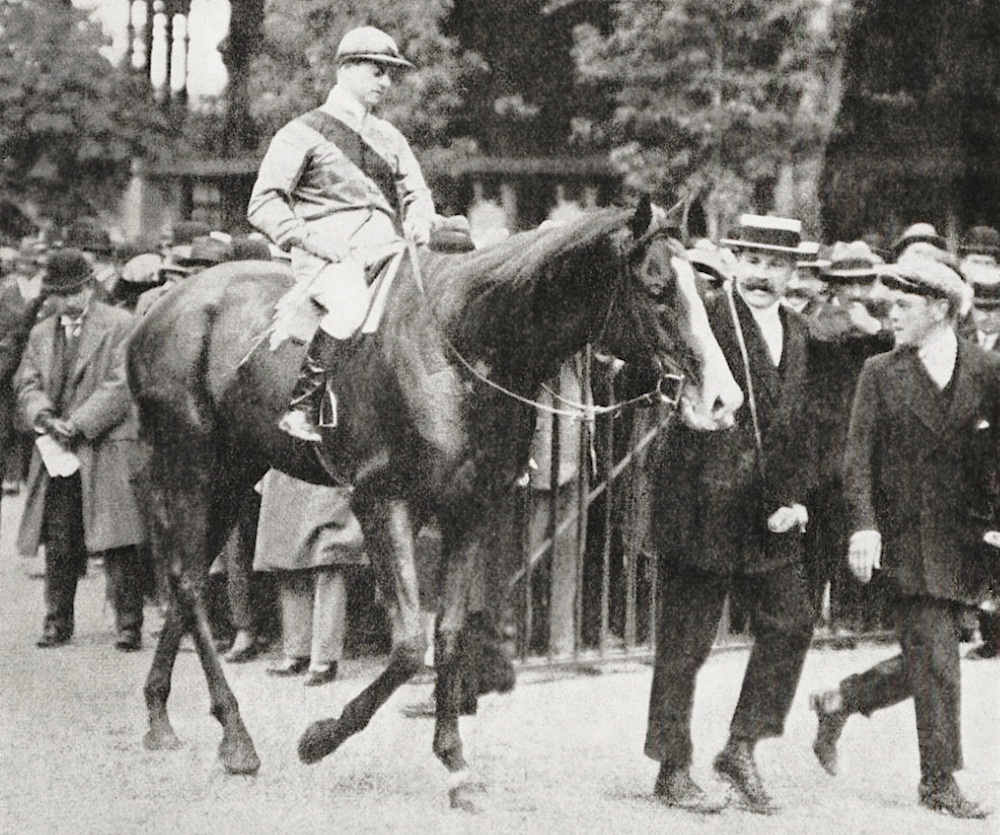
Sardanapale was expected to carry the maximum weight of 130 pounds, compared to a minimum of 114.5 - but as we've seen throughout the season, his owner, Baron Maurice de Rotschild, had no fear of bold or unconventional challenges. Eventually, the purse was unexpectedly doubled to 80,000 francs, and the race attracted a surprisingly strong field - Djamy, Mousse de Mer, and Oreste II, each hoping that the weight concession might tip the scales in their favor.
In truth, none of them made Sardanapale sweat. They even didn't make him seriously run.
Postscript
Only two days later, World War I broke out. The careers of Sardanapale and all his contemporaries - Dagor, Durbar, La Farina - were abruptly abandoned. The racing world would never discover just how good Djamy might have been, or what true form four-year-olds brought into the Prix du Président de la Republique. Yet one thing is certain: Sardanapale had nothing left to prove. Even a stellar four-year-old campaign or ventures across the Channel would have added little to his legacy. His summer triumphs were so brilliant that no-one could reasonably have asked for more from a racehorse.
After the Prix du Président de la République victory, Sardanapale surpassed Maintenon as the richest French racehorse of all time. The grand chestnut had amassed 914,275 francs during the 1906 & 1907 seasons; Sardanapale became the first French millionaire, earning a staggering 1,019,795 francs in prize money and breeders' bonuses. Hopes were high that he might even surpass Britain's Isinglass, whose converted earnings approached 1.5 million francs. And given Sardanapale's form, he was more than capable of doing so.
There is yet another measure of Sardanapale's greatness that deserves recognition. He made 16 lifetime starts - not an unusual number at first glance. But it wasn't just how many - it was how he made them: Ormonde, the legendary British colt I mentioned at the start of this story, ran the same number of races over three seasons. Sardanapale accomplished it within a single calendar year - just seven months of actual racing. I wonder if my generation will ever see a racehorse with that kind of physical toughness. The modern racing era certainly doesn't seem to favor such dreams.
This article was intended to focus solely on Sardnapale's racing career, and for this reason, I avoided discussing his pedigree. Likewise, I won't dvelve too deeply into his stud career, but his success was too great to remain unmentioned. In the era of giants like St. Simon, Bruleur, and Teddy, Sardanapale became the French leading sire twice, in 1922 and 1927, followed by his son Apelle in 1933. And the two stallions achieved something else exceptional together: they carried the rare sire line of Monarque - Le Pompon, which emerged in France in the 1850s, into the second half of the 20th century.
As for direct influence, Sardanapale's son Dis Donc appears in the pedigree of Bull Page - and therefore, in that of Nijinsky. Apelle became the damsire of Tenerani, who sired the mighty Ribot. These are remarkable connections on their own, but Sardanapale also proved a magnificient sire of mares. Corrida's dam Zariba and celebrated French broodmare Astronomie stand out among dams of numerous great runners and influential stallions, with leading sires Goya II, Tantiéme and Prince Chevalier leaving a lasting mark on European pedigrees.
Sardanapale also had a surprisingly strong impact on American breeding. He was the damsire of the Kentucky Derby winner Broker's Tip and his half-sister Bleebok, whose family would go on to produce Roberto. This Epsom Derby winner and elite stallion carried Sardanapale twice in his pedigree, with the second strain coming through Nashua. As every racing fan knows, Nashua influenced Mr. Prospector - and another of Sardanapale's distant descendants, Hillary, helped bring about another modern titan in Sunday Silence.
Names like Ribot, Nashua, Nijinsky, and other modern sires speak for themselves, and I'll leave this story where it belongs: without commentary, without conclusions. Sardanapale, in both his racing and stud careers, hardly needed them.